What the critics are saying
“Raw. Honest. Unapologetically real”.
“This performance is not just art. It is ceremony”.
By Ingrid Campbell
There are performances that entertain, and then there are those that transform. Bones is the latter. Resonance echos through the cellular. Julian Noel stands alone on stage but carries the presence of generations—living, dead, silenced, and roaring. What he offers is no mere one-man show; it is a spiritual and ancestral reckoning, an unflinching mirror held up to colonial violence, familial rupture, and the complex, painful inheritance of identity.
Raw. Honest. Unapologetically real.
From his koro’s nightmares of war, to the silent agony of his mother’s sexual abuse and mental anguish, Noel weaves a story that bleeds truth. It is not linear—it is layered, spiralling through time and memory, anchored in te ao Māori, but also navigating the whitewashed terrain of colonial expectation. The transitions between narration and dramatised embodiment are seamless, carrying us through decades of trauma, loss, dislocation, and survival.
He speaks of being removed from whenua, of foster homes, nuns’ houses, dust, scones, and the lingering scent of broken safety. Of brown boys stripped of home, dignity, and name. Of his Pākehā father—army, adultery, and silence. Of his displacement from home for 35 years, swallowed by war, racism, machinery, and mining. Anger bolts into machinery, and colonial masculinity becomes both armour and wound.
And yet—through all of it—his words are alive. Sailing into ears, flooding the room with echoes of ancestors, beckoning us not just to watch, but to walk alongside. It is in the walking that we witness the reclamation. The powerful return home. The profound, shaking declaration: "Let me be white? Fuck that!" And still—grief. Still—shame. Still—the ache to belong.
But Bones does not leave us there. It lifts us, finally, into the wisdom of a kuia, into the rongoā of storytelling, into the whakapapa of healing.
This performance is not just art. It is ceremony. Bones can talk!
“A masterclass in storytelling”
Review byJackson Rosie
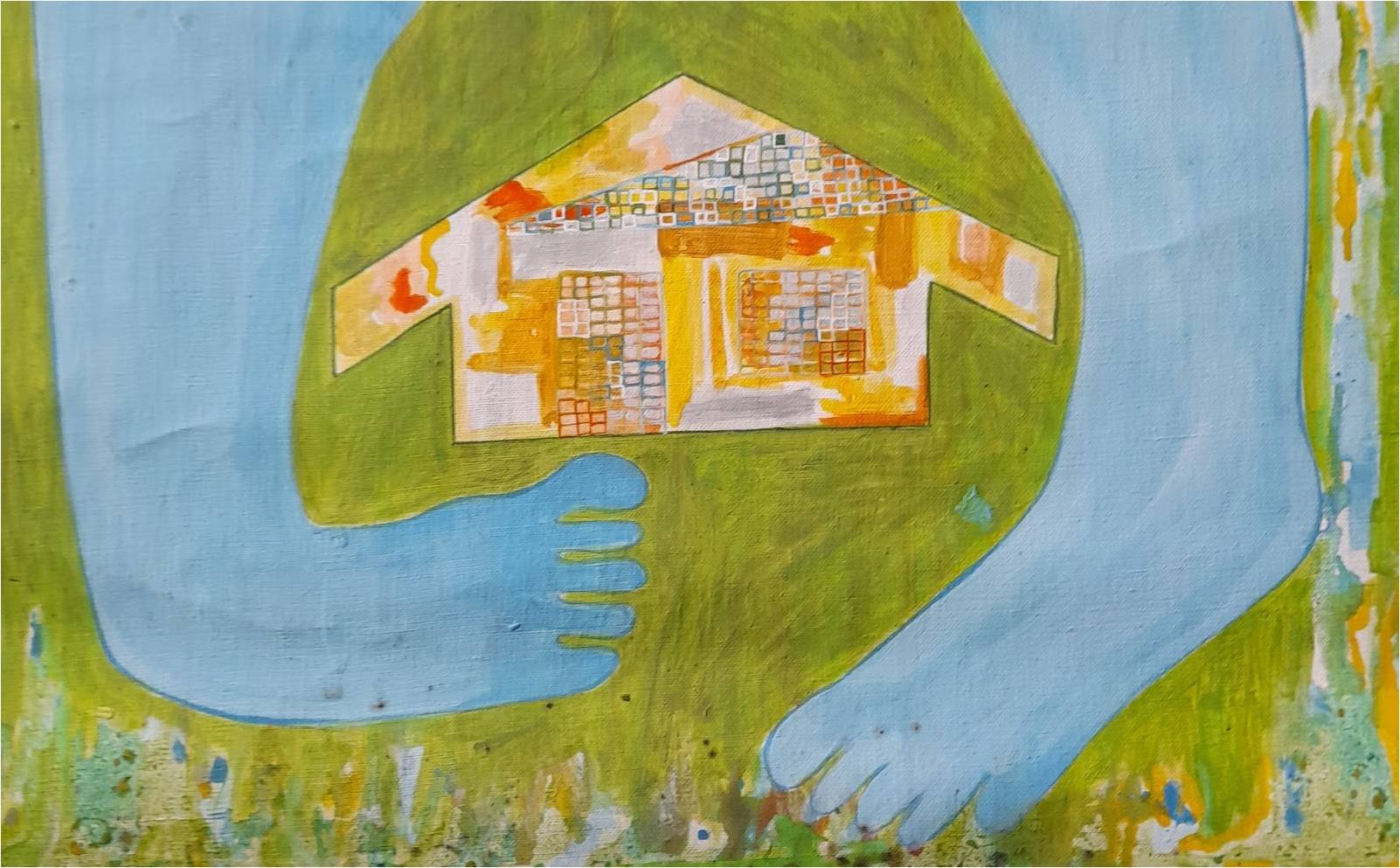
“Our stories become the houses we live in…”
Written and performed by Julian Noel (Ngāti Whātua, Ngāti Torehina) and directed by Martine Baanvinger, BONES is a masterclass in storytelling. It is a performance that opens your heart and welcomes you into a family, and admits “yeah, we’re not perfect”.
BONES tackle’s themes of generational trauma, sexual violence, imploding families, colonial violence, “and the complex, painful inheritance of identity” (Quote from publicity).
Julian should be commended for the power he holds within his ability to share stories; he takes what is very clearly difficult to discuss, for what he discusses is his life, and turns it into hope.
Performance
Julian expertly switches from an old woman, to a pastor, to a 12-year-old girl, to a young and inquisitive boy. Only at the end when he returns as himself do we really get the chance to realise how much he was putting into these performances.
What fascinates me about Julian’s performance is how expressive he becomes with his face, his use of accent and vocal tone – going from a ‘stereotypical’ Māori, cussing away and dragging his words together, into a young boy who stutters and mumbles his words, hiding shy inside his clothing and often shouting when he grows in excitement – is masterful.
Storytelling devices (specifically the use of Verfremdungseffekt )
It’s here that Julian’s writing coincides with skilled direction by Martine Baanvinger, who employs a few storytelling devices which drive the way we experience some of the more difficult subjects.
Julian will be physically embodying a character on stage, most often when playing characters who evoke humour or are driving the story along. However, when the story takes a turn – notable examples being when discussing abuse from Julian’s childhood, or even at one point in the show, a sexual assault – Julian will sit down on a chair, and drop character. He will put on his glasses and hold his script in hand, and simply read the text to us. It creates distance without diminishing impact. It’s very Brechtian, and it’s veryeffective.
The skilled way of sharing these stories adds to the kaupapa of the show. These are not the points Julian is trying to make. He wants to share with us the hope from within the bad stories, and highlight the ability to come out on the other side, as he does with this show. It’s not about sitting with the dark moments, it’s about focusing on the beautiful moments around it.
Commendation to director Martine for weaving difficult subjects so well and making for a show that navigates sensitive themes with ease. These subjects stick around in a way that makes their impact linger but keeps audiences safe.
Whakapapa
I was lucky enough to speak with Julian after the show. I shook his hand and explained how grateful I was for this show and for his sharing of the subjects. I also have written a show for this year’s FGringe Festival which tackles the journey to stay in touch with your own whakapapa, so I hold a lot of respect for what Julian has done with this show and appreciate how vulnerable it is.
It’s not easy to stand up and discuss your childhood, let alone act our figures from within it who may have some questionable beliefs or values. What strikes me the most is the way Julian explains to the audience in a Q&A afterwards about the process of leaving this behind.
“It’s taken years of therapy to be able to sit with this as I do now” he explains.
The story ends with Julian coming out of character and being open about his own connections to the story. He laments, it’s beautiful and heartbreaking. The audience cries, and the room is very well lit so it’s hard to miss. It’s an intimate production, so we feel it.
Julian cries with us.
That’s the beauty of art – and of these festivals. You can shake the hand of a person you do not know and know that person has spent years working to make you feel something.
“Our stories are the houses we live in,” he explains, “but remember, every house has a door. It just takes one person to leave.”
The audience refuses to leave. Julian returns from backstage with a water bottle in hand and the audience clap again. Tear filled eyes look at him and he smiles at us. One by one, audience members shake his hand, some even hongi. It’s beautiful to see the respect given to Julian after what he has shared with us.
Speaking with Julian after the show, I feel like I know him. I shake his hand and I look at him as though he were familiar to me. I thank him, for he deserves to be thanked.
Julian, thank you for sharing with us your story. The vulnerability you share and the realness in your performances, and your kaupapa, make for an amazing show worth watching.
“BONES is an unmissable piece of theatre”.
“Bold, innovative, and deeply moving”.
By Kate Lindsay
BONES performed at Whare Taupua as part of Arts Murihiku’s May ‘Mini Fest’ weekend, is a theatrical experience that lingers in the heart long after the standing ovation wanes.
Reviewed by Kate Lindsay
Written and performed by Julian Noel, the play is based on his own book and draws inspiration from the life of his mother, Māori artist and poet Eve Patuawa Nathan.
While the story is fictional, a powerful thread of truth runs through every scene, grounding the performance in lived experience and generational memory.
Noel’s approach is both intimate and innovative. Audience members participate in song, transformed into living, breathing whānau; drawing us further into the heart of the story.
The staging is creative and clever. Beneath the ominous looking sheet, kitchen utensils are transformed from weapons to musical instruments with a mere flick of the wrist.
Noel’s performance is a tour de force as he inhabits eight distinct family members, including his grandmother, various uncles and himself as child. Each character is drawn with empathy and depth, their stories interweaving to create a family tapestry of love, loss, and survival.
The play fearlessly explores hard-hitting themes: the PTSD suffered by returned World War II soldiers, the enduring scars of colonialism, violence and abuse hidden behind closed doors, the trauma of foster care, and the profound impact of Māori urbanisation—especially for those left behind in rural marae communities.
‘Bones’ is an unmissable piece of theatre—bold, innovative, and deeply moving. Julian Noel’s performance is both a tribute to his whakapapa and a gift to the audience, inviting us all to reflect on the stories written in our own bones. Whether you come for the artistry, the history, or the chance to sing along, you’ll leave changed
“Powerful, raw and deeply moving with moments of humour and relief”
Review by Robynne Jephson
It is never easy to tell stories of intergenerational trauma, but at the WAA! Club during the Nelson Fringe Festival, Julian Noel does so with aroha and whakapono. His storytelling leaves the audience with a sense of empowerment and light. He urges us to tell our stories, but not to become them.
Bones is a co-creation between writer and storyteller Noel (Ngāti Whātua, Ngāti Torehina) and Martine Baanvinger – actor, director, and one of New Zealand’s leading exponents of solo performance.
Noel embraces his whakapapa and invites us to encounter the ghosts of his past. Each character is distinct, defined through a simple gesture, a small costume piece, or a subtle shift in tone. Everyone feels convincingly individual.
A personal favourite is the kuia who opens the piece – wise, humorous, and empathetic. She enters with a karakia, calling on our wairua to follow in the footsteps of our tūpuna and guiding us toward wisdom and light. As she enters, she scatters flour across the stage, symbolising the ashes of the dead beneath our feet, reminding us they are always with us.
The flour reappears later in a powerful memory of another ancestor who fought in World War II. It covers his head – the ashes of the dead from a war that touched millions.
Noel generously shares these memories. Some are humorous, but many are deeply painful. The most difficult are told through the device of a diary entry, allowing him to narrate rather than relive the trauma. This distance does nothing to lessen the impact; if anything, it deepens it.
The inventive use of props and set is another clever feature of Bones. A long table draped with a white sheet covers several objects, its outline suggesting Aotearoa itself, a body, and even a cooking class. The everyday items transform repeatedly – becoming cowpats, a milking shed, foster families and more. These shifts create moments of humour and relief within a work that is otherwise powerful, raw and deeply moving.
The WAA! Club is tiny, making it the perfect venue for this intimate theatre. Noel frequently interacts with the audience – joking with us, inviting us to join him in song, and even playfully scolding someone when a phone pings. These moments add warmth and immediacy to what is ultimately a very personal story.
Noel refuses to let these stories define him. Instead, he finds the front door and walks through it, creating a new path for those who come after him while still acknowledging the past. Many of us carry stories like these. Some of us have become our stories. Perhaps, by telling them, we can step back, gain distance and find our own path toward the light.
Kia whakatōmuri te haere whakamua – “I walk backwards into the future with my eyes fixed on my past.”